Thursday, November 8, 2018

l'Abbé Pierre et Emmaüs

This post was inspired by an item on the BBC website about buying secondhand goods... 

I first 'met' l'Abbé Pierre back in 1995.

I was studying my first Open University course, Cadences, encouraged by my best friend Jeannie who was already a pretty fluent French speaker. We'd met at an Italian class and discovered that we were soul sisters, and we studied together for the Institute of Linguist Italian exams together. That led to me embarking on French and her starting to study for her French degree.

Jeannie died fifteen years ago, before completing her studies, while I went on to earn my degree in 2012, in French and English, of course, I did it for my friend as much as for myself.

Since 2015 I have also shared the breast cancer that killed Jeannie, life has a wicked sense of humour, I think.

I digress, as ever, but with good reason.

L'Abbé Pierre will always, in my mind, be associated with Jeannie, so who was he?


He has been variously described as: The French Mother Theresa, The Conscience Of A Country, A Living Saint.

L'Abbé Pierre (born Henri Antoine Grouès; 5 August 1912 - 22 January 2007) was a French Catholic priest, member of the Resistance during the World War II, and deputy of the Popular Republican Movement (MRP). He founded in 1949 the Emmaus movement, which has the goal of helping the poor, the homeless and the refugees.  (Wikipedia)

Abbé means abbot in French, and is also used as a courtesy title given to Catholic priests. He was one of the most popular figures in France, he probably still is.

For me it was the Emmaüs organisation that first attracted my attention even before I knew that he had been a Resistance hero, had saved the lives of French Jews, been decorated etc etc.. Before I had learned of his efforts across the globe to relieve suffering and bring joy.


The winter of 1954 was bitterly cold in France and the homeless were freezing to death on the streets so L'Abbé Pierre broadcast the following radio appeal:

"My friends, come help... 
A woman froze to death tonight at 3:00 am, on the pavement of Sebastopol Boulevard, clutching the eviction notice which the day before had made her homeless... 

Each night, more than two thousand succumb to the cold, dying without food, without bread, many almost naked... 

Hear me; in the last three hours, two aid centers have been created: one under canvas at the foot of the Pantheon on Montagne Sainte-Genevieve Street; the other in Courbevoie. They are already overflowing, we must open more, in every neighbourhood. Tonight, in every town in France, in every quarter of Paris, we must hang out placards in the night, under a lamp, at the door of places where there are blankets, straw, soup; where one may read, under the title 'Fraternal Aid Center', these simple words: 'If you suffer, whoever you are, enter, eat, sleep, recover hope, here you are loved'.

The forecast is for a month of freezing weather. For as long as the winter lasts, for as long as the centres exist, faced with their brothers dying in poverty, all mankind must be of one will: the will to make this situation impossible. 

I beg of you, let us love one another enough to do it now. From so much pain, let a wonderful thing be given unto us: the shared spirit of France. Thank you! 

Everyone can help those who are homeless. We need, tonight, and at the latest tomorrow, five thousand blankets, three hundred big American tents, and two hundred catalytic stoves. Bring them quickly to the Hôtel Rochester, number ninety-two, laq Boetie The rendez-vous for volunteers and trucks to carry them; tonight at eleven, in front of the tent on Montagne Sainte-Genevieve. 

Thanks to you, no man, no child, will sleep on the asphalt or on the waterfronts of Paris tonight. 

Thank you" 


This speech touched the heart and conscience of a nation and resulted in an "uprising of kindness" (insurrection de la misère) with a staggering 500 million francs being raised in donations. A few weeks later, in March 1954, the  Emmaüs community was created with volunteers to assist the homeless by providing them with food and a roof over their heads and, more importantly, somewhere to work to raise the money to pay for the community.


In time many of the sans-abri became, themselves, volunteers in accordance with l'Abbé Pierre's desire to show that even those who have nothing, who are totally destitute, can still help others... no-one is completely helpless or without worth.

There were many, many other humanitarian roles upon which l'Abbé Pierre embarked. He travelled to the countries where he was needed and he wrote books, lectured and taught his message of love and charity and providing people with the means to help themselves.

His was a life of action and service rather than words and rhetoric.

So, if you do only one thing today to benefit others... If you take only one small step, please, read more about l'Abbé Pierre and see if his life doesn't provide you with the inspiration to help others and if his story doesn't make you feel humble and grateful for whatever you have been granted in this life then nothing ever will.

Tuesday, October 16, 2018

I went to the woods...


I  went to the woods because I wished to live deliberately, to front only the essential facts of life, and see if I could not learn what it had to teach, and not, when I came to die, discover that I had not lived.
(Henry David Thoreau)


I went to the woods because I was starting to suffer from cabin fever, because the dog deserved a good long walk with lots of new smells to explore, and because I wanted to play with the korrigans.

You've never heard of the korrigans?


Perhaps you are a non-believer?


You've obviously never lived in Brittany.
Me, I take no chances, especially when it comes to elves, fairies, goblins and korrigans.
They were waiting and watching when I arrived.

Look closely at this and tell me, how many faces do you see?


These korrigans were with me as I walked down into the gorge.
Past piles of grey granite boulders that I once climbed, twelve years ago.
I'm hoping to so do again next year...


Deep into the woods.
It looks silent, it wasn't.
There was the sound of the stream tumbling over rocks and stones on its way to the chaos.
There were birds singing in the trees. Invisible birds, I think, Maybe korrigan birds?


As it's autumn, these beauties have appeared, almost overnight.

I have no idea if they are edible. Last autumn a friend and I joined a fungi foray in the woods near my home . We were taught what to look for, what to collect, what was delicious, what was deadly. At the end of the afternoon the guide looked in to my basket and declared that I had collected an example of every toxic toadstool in the woods.

If I ever invite you for a mushroom feast, accept with caution.


The gorge it is a mossy, velvety, seeingly soft world.
Do not be fooled, the moss covers hard rocks and jagged tree stumps, sharp branches and the gaping mouths of bottomless pits.
Well, maybe not bottomless, but who knows?
And look what happened to Alice when she fell down the rabbit hole.


Do you think that the korrigans stole this horse from an annoying human and hung it from the higher branches of the tree? I hope it's released before nightfall...


I found some korrigan art.
To this one I added a couple of twigs.
I hope they like it...


This one was too far for me to adorn.

It was on a large granite boulder in the middle of the pile that constitute the chaos. I would have clambered over but I had the dog with me and he would have fretted. And I would probably have slipped among the rocks.

It's rather lovely though, I think...


I wonder if there is a Breton word for shinrin-yoku - forest bathing...
Koeswik koronkat is the closest I can get.
Koeswik koronkat with korrigans.


There is a new movement towards outdoor schooling for children.
Forest schools

A link to Forest Schools in the UK
Here's a BBC film about one in Dorset, UK 
and a BBC film about another in Norfolk, UK

When I was a child we spent a lot of time enjoying nature rambles, either with the teacher and my classmates or with my family. When I had children I took them out into the countryside and we walked for miles, explored, played, climbed trees and bloulders, collected random things for the nature table at home that we updated each week, and came home tired, dirty and very grounded.  

I am a great believer in being outside.

If you need any more persuading, here are some BBC podcasts from The Essay:
Mirkwood -  The great forests of Middle Earth 
Brothers Grimm -  the dark Germanic forests of the brothers Grimm
The Wood Beyond the World - A meander through the lush, romantic delights of the pre-Raphaelite forest 

The art of medicine consists in amusing the patient while nature cures the disease
(Voltaire)


Thursday, September 20, 2018

S is for Scallops...

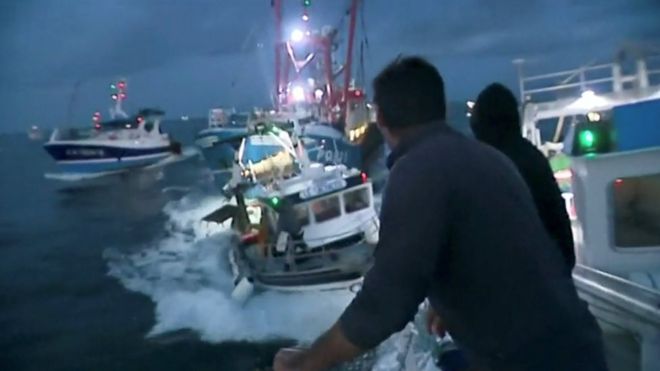
We eat a lot of scallops here, in Brittany. Which is why the recent spat between the French and English fishermen caused a bit of a stir.

                               
                           French and UK boats collide in the English Channel during a row over scallops
                     
                          (Pic Reuters from bbc.com)

The main point at issue was the size of the British boats coupled with the fact that they are fishing all year round, whereas the French, quite sensibly, allow the scallops some respite between May and October to keep stocks at healthy levels.

Of course, I am on the side of the French fishermen, And the scallops.

The environmental mayhem wrought by commercial scallop fishing is truly terrible.
Large boats dredge the sand, scraping up everything in their path, destroying countless communities of sea creatures, laying bare huge swathes of the seabed.

In addition to being so destructive, dredged scallops can spend anything up to two weeks languishing in the bottom of the boat before they even make it to terra firma and your dinner plate, during which time the flesh begins to deteriorate.

But reading about an agreement reached between the UK and French got me thinking about scallops...

A scallop is a marine bivalve mollusc of the family Pectinidae.
scallop -> noun 1. an edible bivalve mollusc with a ribbed fan-shaped shell. Scallops swim by rapidly opening and closing the shell-valves.
# short for SCALLOP SHELL
# a small pan or dish shaped like a scallop shell and used for baking or serving food
2. (usu. scallops) each of a series of convex rounded projections forming an ornamental edging cut in material or worked in lace or knitting in imiation of the edge of a scallop shell.
3. another term for ESCALOPE

-> verb (scallops, scalloping, scalloped)
1. [with obj] scalloped ornament (an edge or material) with scallops
# cut, shape or arrange in the form of a scallop shell
2. scalloping gather or dredge for scallops
3 bake with milk or a sauce: [as adj] scalloped

- DERIVATIVES scalloper noun
- ORIGIN Middle English: shortening of Old French escalope, probably of Germanic origin. The verb dates from the 18th century

(That's for those of us who like words, courtesy of the Oxford Dictionary of English)

And for the biologists:


Scallops are hermaphrodites; capable of switching sexes. Both sexes produce roe, whose coloring depends upon the parent's (current) sex. Red roe is that of a female, and white, that of a male. 


After fertilisation scallop ova sink to the bottom of the sea. After several weeks, the immature scallop hatches and the larvae drift until settling to the bottom again to grow. They reach sexual maturity after several years, though they may not reach a commercially harvestable size until six to eight years of age. 

Scallops may live up to 18 years, with their age reflected in the annuli, the concentric rings of their shells.(Wikedpedia)

One fascinating fact about scallops is that they have many, many eyes..

The eyes are very tiny, and occur along the curved edges of the shell, just inside, about one eye per shell corrugation. Each eye is rather remarkably like a certain kind of reflecting telescope complete with a spherical mirror to reflect incoming light rays onto a retina, after being corrected for spherical aberration by passing through a lens
(From Everything 2)

Blue-eyed beauties!


                            .


Personally I'm bit of a shell-person and scallop shells are, to my thinking, The Epitome of A Sea-Shell. Keep your conches, wave away your winkle shells, lose those limpets, give me a scallop shell anyday.

I've used scallop shells as ashtrays, bead boxes, pin holders and, of course, serving plates for seafood dishes back in the 70's when we ate prawn cocktail on a bed of that nasty iceberg lettuce as a starter for quite a few of the dinner parties that we hosted. The main course was probably a veal scallop and scalloped potatoes and desert, a pie with a scalloped edge...

Now I collect them whenever I'm walking on the beaches here. It seems wrong not to. How can people just walk past a scallop shell? À chacun son goût, I guess, and my goûts are definitely shells.

Here's how to clean a scallop:
An Illustrated Guide To Cleaning A Scallop
And here are some links to scallop recipes:
Fisherman's Express ('all wild and all natural')
About.com:Home Cooking
Recipe Zaar

Enough already?
Ok, just one more, my favourite recipe, Scallop Bisque

Care to make an angel from scallop shells? Then look no further than this link

I'd post a picture of the blanket that I crocheted when I was 17 years old, if I hadn't lost it along the way. The stitches resembled scallop shells. Maybe I'll crochet another one one day soon...

What else can I say about scallops?

The scallop shell is often associated with the act of pilgrimage. It is said that this comes from the Way of St. James, also known as el Camino de Santiago, the pilgrimage to the cathedral of Santiago de Compostela in northern Spain. Legend says that it is here that the remains of the apostle Saint James are buried.


The shell features a single point from which ribs radiate outwards, a symbol of pilgrimage. By tradition dating back to the 8th century pilgrims would bring back a scallop shell to prove that they'd completed  the journey. This then developed into the symbol of pilgrimage

Something for the linguists...

In some languages the scallop shell is called the muscle of St. James.

The German word for scallop is "Jakobsmuschel".
The Swedish word for scallop literally translates to pilgrim mussel.
A French name for a dish containing scallops is coquille St. Jacques (in Québec, pétoncle is more commonly used).
The Dutch name is Jakobsschelp (James being English for Jacobus).
In Danish, ibskal refers to scallops worn by pilgrims from Santiago de Compostella (Ib being the Danish name for St. James)
(Wikepedia)

Once, on a trip to the coast to find a sawmill my then-partner and I stopped by a lake to take a walk with the dogs. The lake is around 5kms from the sea.

As we walked amongst chestnut and pine trees something in the fallen leaves caught my eye.
It was a beautiful scallop shell.
Ever the forager I bent down to pick it up and in so doing I unearthed a veritable treasure-trove of scallop shells.

By the time that we'd finished digging we had filled a large carrier bag

We brought them home to sit in their bag and wait for me to clean them, drill a hole in each and string them up somewhere, they're still waiting....

I have no idea who left them or why they were there.
One of life's mysteries.

By the time that we'd finished digging we had filled a large carrier bag. We brought them home to sit in their bag and wait for me to clean them, drill a hole in each and string them up somewhere, they're still waiting....

I have no idea who left them or why they were there.
One of life's mysteries.


The scallop shell is also associated with the cult of Venus, as seen here in Botticelli's beautiful The Birth of Venus.


The painting avoided the flames of Savonarola's bonfires that reduced all such 'pagan works' (including many books) to ashes.

It obviously pays to have friends in high places and the Medici Family were very high indeed. Such a shame that the same Florentine family abandoned poor old Galileo to the wrath of the Catholic Church for daring to suggest that the earth revolves around the sun.

So, there you have it.
The simple scallop.
Amazing what you discover when you dig a little deeper.                         


Tuesday, September 11, 2018

Le Sentier des Douaniers on Sunday

I hadn't been to the coast for a few days and I was in need of a day communing with nature, and it's been shown that spending time out of doors in green spaces is good for your mental and physical wellbeing:

This Is Your Brain On Nature from National Geographic

The Effects of Nature on Well-Being from Natural Resources Institute Finland

In Japan they talk enthusiastically about Shinrin-Yoku, or, forest bathing, it's becoming quite the thing as people seek to reduce the stresses of life.

Me, I love being outdoors. Especially at the coast.
Thalassotherapy!
Sea bathing.
Or simply sitting on the sand and listening to the waves make the small pebbles dance and sing. I have a special spot for that, round the orner from Tourony. I'm often to be found there, sitting by the edge of the water with my eyes closed in a semi-yoga state. It is deeply relaxing.

This time I made a big mistake though.
I arrived at Trégastel at 9:45, popped into Super U for some bits and bobs, drove to Ploumanac'h and parked the car and noticed, from the beach there, that the tide was ebbing. And I was so pleased to have parked in the centre of the village that I decided not to drive to Tourony to swim but, instead, to walk and have lunch first.

People, that car park fills up so early and to have found a spare place was, well, it was like Christmas with snow, and elves and reindeer!


I'll do the Sentier des Douaniers from this end for a change, I thought to myself as the dog and I set off walking.

Note, there will be many pictures because it is just so picturesque, n'est-ce pas?


Et voilà...

The Sentier des Douaniers. The path leads from Ploumanac'h to Trebeurden. I usually fo the bit from the car park near the camp site to Plouamac'h and then walk back after lunch, but it's good to vary one's routine sometimes and there was the matter of the car parking space so I set off the other way.


Leaving Ploumanac'h under the eucalyptus trees...

I love the way the bark peels from them, and I love the fresh scent of the leaves. They are said to cleanse the air and I'd plant one in my garden but I did that once before and the tap root was so thick I thought it might tunnel under the foundations of the house.

Since I am having my 'jungle' cleared next month I may plant one up there...
I'd quite like to make it a forest garden.


Where were we?

Right, emerging onto the coastal path with the lighthouse in the distance and the start of the most amazing pink granite rock formations...


This pink granite is only found in two other locations in the world. One is in China, I forget where the other is. It's the product of volcanic activity (soon you'll come to learn how much I love volcanoes) and these rocks once formed a mountain range higher than the Alps...


Four million years of weathering has eroded them, and sculpted them into natural artwork, and it's funny to think that in a few more thousand years they will all be just pebbles and small rocks.

But comforting, in a way... 


It's a busy place on a sunny Sunday morning.

Soon the tourists will have departed and it will be much less crowded on the sentier, especially when the weather is wet and stormy. I walk in all conditions. A colleague from Norway once told me, 'There is no such thing as bad weather, only bad clothing.'

I agree.


It's still possible to find a quiet spot to sit and write. I'd love to know what this woman was working on, perhaps her first novel? maybe a love letter to a long lost amour?


At the end of the lifeguard ramp there were people scub diving. Damn! I had meant to take that course this year and now I think it will be too late to start. Another reminder that one should not delay because life passes so quickly.


Most people ignore the collecting box on the wall of the lifeguard's building. The French seem to expect that the state will take care of such things so charities are not so well-supported here. In an ideal world they would be but I think it's good karma to help others when we can so I always pop a euro in the boat when I pass.


The Sentier des Douaniers is a protected natural space. A decade or so ago the walkers had pretty much eroded the soil and destroyed much of the vegetation and then it was decided to reverse the damage. A team of volunteers made little paths and put up small wire fences to encourage the visitors to stay on them, installed signs explaining why and now it's pretty much recovered. 


There are still those who don't respect the environment but most people are considerate. I make no apologies for being a long-time eco-warrior, and I have been known to (politely) request that people step back onto the path, and mostly they are understanding.


On this walk I discovered this sign down by a little spring on a path just off the main route.


No sign of the salamanders...
The dog and I did look.

There are quite a few in the ditches and streams near my home though, and a friend has one living in her water metre hole. They look quite exotic with their yellow and black colours.


One of the best things to do on the sentier: stand and stare.

 I spend a lot of time sitting with my eyes closed and listening to the sound of the waves on the rocks. And taking photographs of the water because the colours and the patterns fascinate me.


Heading back to Ploumanac'h for lunch.


This is an interesting sign on the way back into the village.
This part of France was occupied by the Germans during WW2 and the Resistance fought hard here. The countryside is dotted with crosses to mark the spot where a Resistance fighter died, near my home there is a crossroads at which thirteen men from my village were executed for 'disobeying the Gernans.'


And so back to the beach at Ploumanac'h


Past the notice detailing the times and heights of the tides for the day. And this greeting that made me smile. Happily it does not apply to me. I am, as I have to keep explaining to people, a resident.


Remember the people who do not respect the rules?
Dogs are not permitted on the beach between 15th April and 15th November.
Didn't seem to worry this pair, even though they risked a large fine.


I had a packed lunch but, well, who knows when I'll be back in Ploumanac'h, parked right in the centre and hungry enough to do justice to a lunch at one of my favourite restaurants? A change of plan, I decided to eat there again.

Alas, they do not take cards, only cheques and cash, so I had to go in search of 'the bank' and this was it! Unsurprisingly. quite easy to miss!


And then back to the restauarnt where I didn't even need to order, the waiter recognised me and said, with a smile; 'Kir cassis, escalope de dinde et une carafe d'eau?'
I am very predictable.
And their turkey steak is very tasty.


So no apologies for always ordering it.
Besides, the restaurant will be closed soon until next spring so another carpe diem moment!


As I walked back to the car there was a queue of people waiting to parl and a tired looking elderly woman asked me, hopefully, 'Vous partirez Madame?' I smiled and said, she was lucky, yes, I was just leaving and she waved happily to her equally tired-looking partner in the car nearby and smiled as I wished her a pleasant afternoon. Silly, but it made me feel good.


And then to Tourony where, the tide being as low as it could fall, Tashi and I walked to the pink castle to take some close-ups.I think I have several thousand pictures of the chateau de Costaérès now but I can't resist taking more.


I wish I could paint. I am about as artistic as my gate post.
Probably less so.
But a couple of years ago it occurred to me that it's a shame that as asults we stop playing and being creative so I bought myelf some little canvases and a set of acrylic paint and now I have fun.


Here's the lighthouse again.
I have thousands of photos of it too.


The beach was quiet.
This group were demonstrating the seriousness with which the French take their eating. They had set up a table, complete with a cloth, cutlery, glasses etc for their lunch among the rocks.


These people were busy collecting their lunch.

I often encounter people with buckets of things in shells and since I usually have a bag of plastic and other rubbish I find on the sand, they often stop me and ask to see what I've found, thinking it's going to be scallops or oysters.


We sat on the beach and watched as the sea slowly reappeared, and I did consider staying for the tide to be full enough for a swim but, well, patience is still a virtue that I have yet to acquire.